
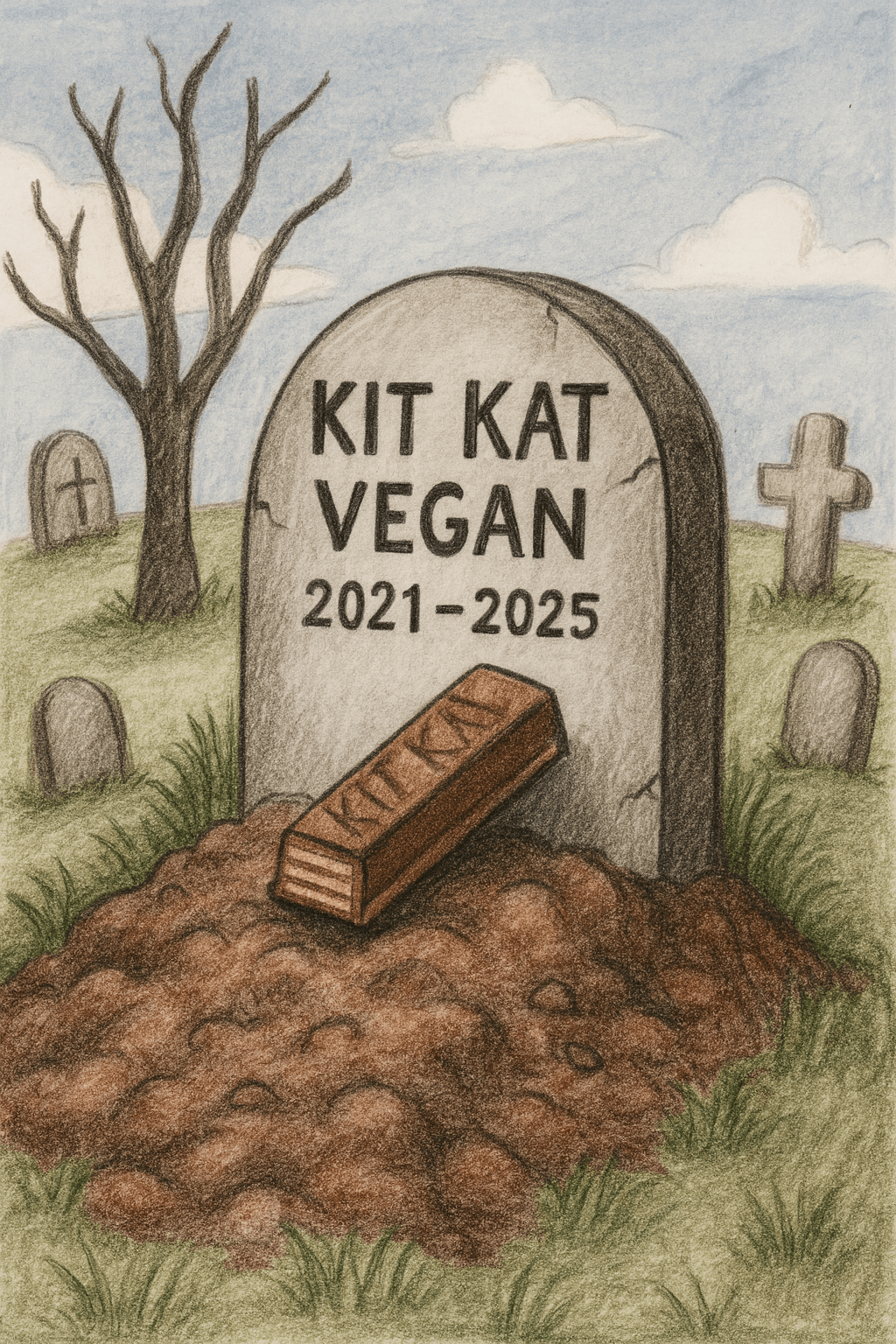
The vegan Nestlé KitKat (also known as KitKat V) launched in 2021 as a plant-based version of the chocolate bar. Using Rainforest Alliance cocoa and no animal ingredients, it combined crisp wafer and chocolate.
It received an enthusiastic UK launch and expanded through Europe and Australia, but lasted less time than expected. In Spain, vegan shops imported it before some larger chains.
The vegan KitKat’s failure seems attributable to several factors rather than one cause.
Nestlé acknowledged falling sales and that a separate production line for small volumes was not profitable.
Some vegans saw a contradiction in buying from a multinational with social and environmental controversies. It is debated: greater vegan visibility may also harm smaller producers.
The price of vegan KitKat was a barrier: in Germany, the per-kilo price was much higher than the dairy version. Inflation reduced its competitiveness. A conventional 41 g pack cost under €1, while the vegan version was around €2.
It was often in vegan or dairy-free sections rather than beside classic KitKat, reducing visibility and making it seem niche. This is a familiar dilemma: looking for plant-based cold cuts beside meat is not appealing either.
Despite being vegan, the wrapper said “may contain milk”which could deter those with allergies or intolerances. I respect buying only vegan brands, though it narrows choices.
2021: highly anticipated UK launch.
2022: expansion to France, Germany, Denmark and Sweden.
2023: limited introduction in Australia.
2024: falling sales and reduced availability.
January 2025: global withdrawal announced except in the UK.
September 2025: confirmation of final withdrawal in the UK and Irelandand the end of vegan KitKat.
The departure of KitKat V offers lessons for brands:
Vegan customers want consistency, not just plant ingredients.
Prices must be competitive to reach a wider audience.
Supermarket visibility is essential.
Allergen warnings affect confidence and loyalty.
Rather than a failure of veganism, it shows large brands must adapt to informed consumers. The lactose-intolerant audience is broad but often does not receive the information.
Although Nestlé has discontinued the bar, there are alternatives to vegan KitKat on the market:
LoveRaw Wafer Bars: probably the closest to the classic, in several flavours.
Vego Bar: popular hazelnut chocolate.
iChoc Choco Cookie: a vegan chocolate and biscuit bar.
Supermarket own brands: some chains offer affordable or seasonal vegan bars, such as Aldi or LIDL
The segment remains active when products are accessible and consistent.
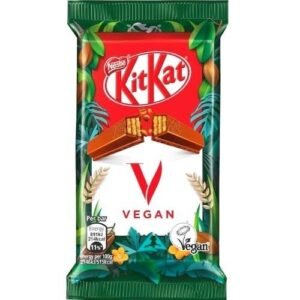
The vegan Nestlé KitKat promised to be a milestone but was eventually withdrawn. Customers expect fair prices, transparency, good distribution and ethical consistency.
Perhaps a different approach is needed: the word “vegan” still provokes resistance. Hellmann’s renamed its “vegan” mayonnaise “plant-based” and it remains on sale. Is that the answer?
Déjanos tu email y descubre cómo conseguir un postre gratis en Veganashi durante octubre. Además, entrarás en el Radar Vegano BCN para recibir nuestras novedades y promociones.
📡 ¡Bienvenido al Radar Vegano BCN!


