
The vitamin B12 is essential for red blood cells, the nervous system and DNA. Vegan diets need reliable intake because natural plant sources are not reliable. This guide draws on sources such as Vegan Health .
It helps prevent megaloblastic anaemia and neurological problems. Deficiency can cause fatigue, concentration problems and severe nerve damage. It is important to be consistent on both vegan and vegetarian diets.
Bacteria synthesise it, not plants or animals. Animals store it in tissues; for vegans, sources include:
Supplementation is not only a vegan issue: livestock production also uses B12 in animal nutrition.
There are several formats, differing in administration and absorption.
If absorption is a concern, consult a professional about format. Without digestive problems, tablets can also be effective.
The B12 absorption depends on several factors. The body uses intrinsic factorproduced in the stomach to help intestinal absorption. Age, atrophic gastritis, coeliac disease or Crohn’s can affect it. The guide cites recommendations from Vegan Health and Viva Healthand describes these regimens depending on age and health:
Proportional absorption falls as dose increases.
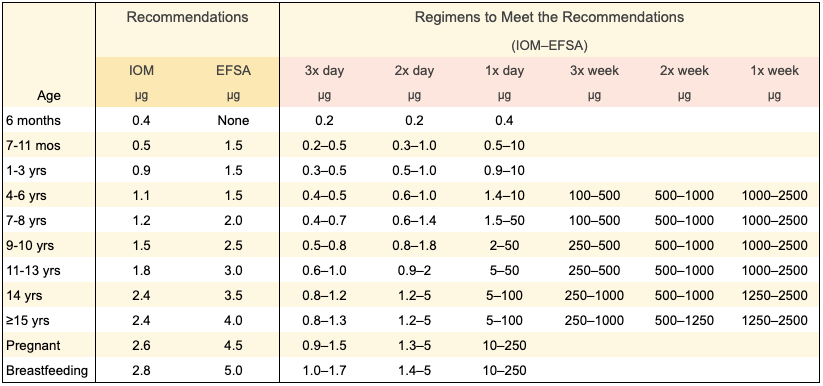
Vegan Health B12 doses
Algae and mushrooms may contain B12-like compounds, often inactive analogues the body cannot use. Therefore, no unfortified plant food is a reliable source.
Early symptoms may include:
Severe cases may involve irreversible nerve damage. Monitoring matters, particularly on long-term vegan diets.
Blood tests can help when intake is uncertain. Serum B12 levels do not always reflect stores adequately. Other markers such as methylmalonic acid (MMA) and homocysteine help assess possible deficiency and prevent complications.
For some absorption problems, options include B12 injectionsor sublingual tabletsunder professional guidance. Reliable intake and monitoring help prevent deficiency.
When buying vitamin B12 there are several forms, commonly methylcobalamin and cyanocobalamin. Both are used to prevent deficiency, with differences in structure and stability.

The choice depends on needs, cost and stability. cyanocobalamin is most common for price and stability.
On vegan diets, ensuring vitamin B12 is essential. The article also describes weekly supplementation with doses of 1,000–2,000 micrograms once or twice weekly. These are preventive regimens; for malabsorption or health conditions, consult a doctor or vegan nutrition professional to adjust the regimen.
Déjanos tu email y descubre cómo conseguir un postre gratis en Veganashi durante octubre. Además, entrarás en el Radar Vegano BCN para recibir nuestras novedades y promociones.
📡 ¡Bienvenido al Radar Vegano BCN!


