

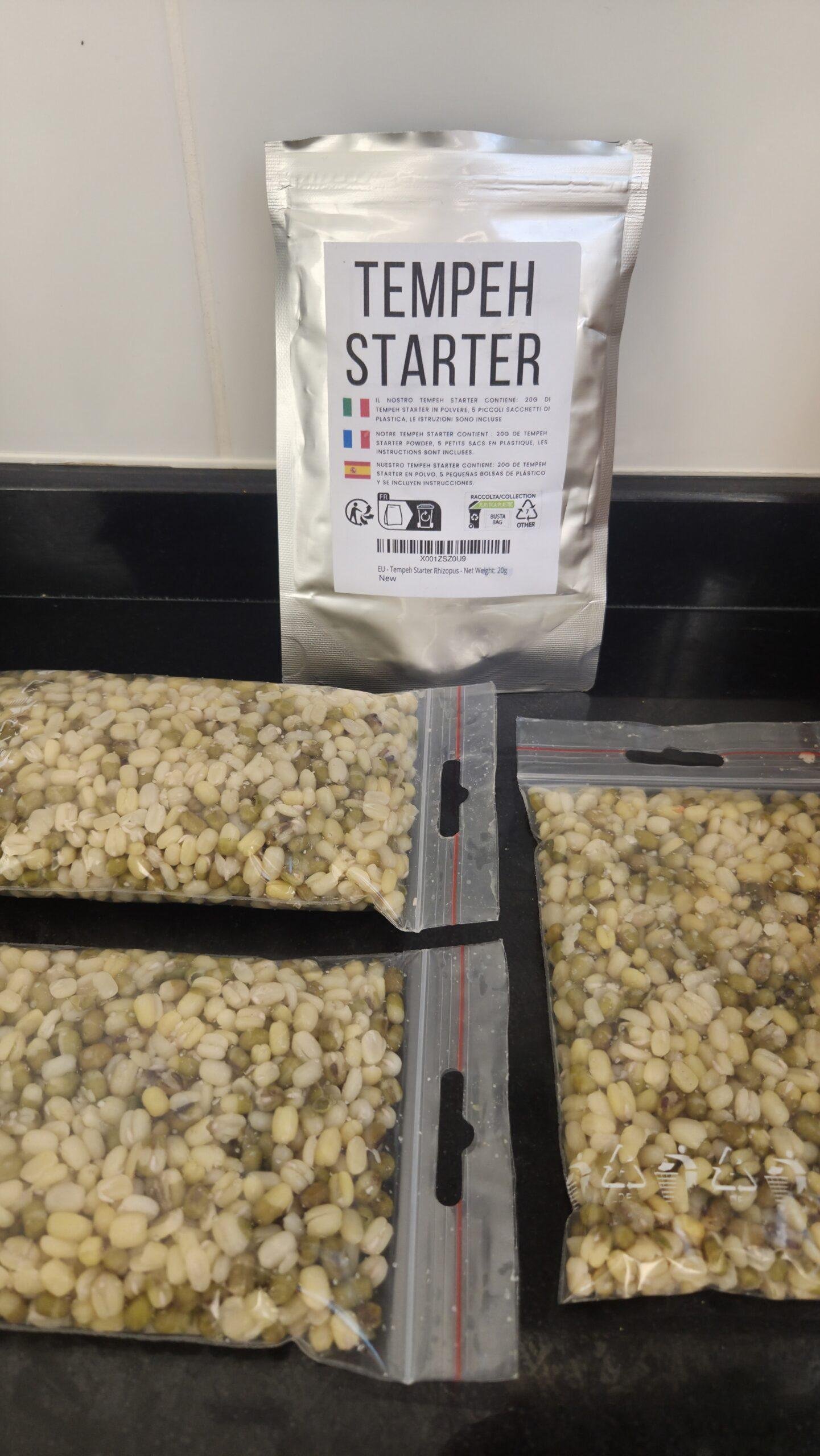
How to make homemade tempeh with Rhizopus starter. For a tasty, protein-rich fermented plant food, tempeh is a good option. This Indonesian food is made by fermenting pulses, usually soya, with the fungus Rhizopus oligosporus. Here we follow the original starter kit instructionsincluding starter and perforated bags. If this is your first time, follow the steps carefully.
The soya beans make good tempeh thanks to their protein content. Use quality dried beans, uncooked and unroasted.
Place in a large bowl with plenty of water for 12 hours. They will swell considerably. You can soak overnight.
After soaking, remove the skins . A grain mill can gently split them; by hand, rub beans together in water. Add cold water so skins float. Remove skins with a spoon or carefully pour off the water. A few remaining skins are fine; remove most.
Cook peeled beans in fresh water over medium heat for around 30 minutes. They should be cooked but firm. Drain well: they must be as dry as possible. Cool in a colander.
Add 5 tbsp white vinegar to the beans. The acidic environment inhibits unwanted bacteria and supports Rhizopus.
When at room temperature, never hot, sprinkle 1 level tsp starter — around 3.5 g — and mix evenly throughout the beans.
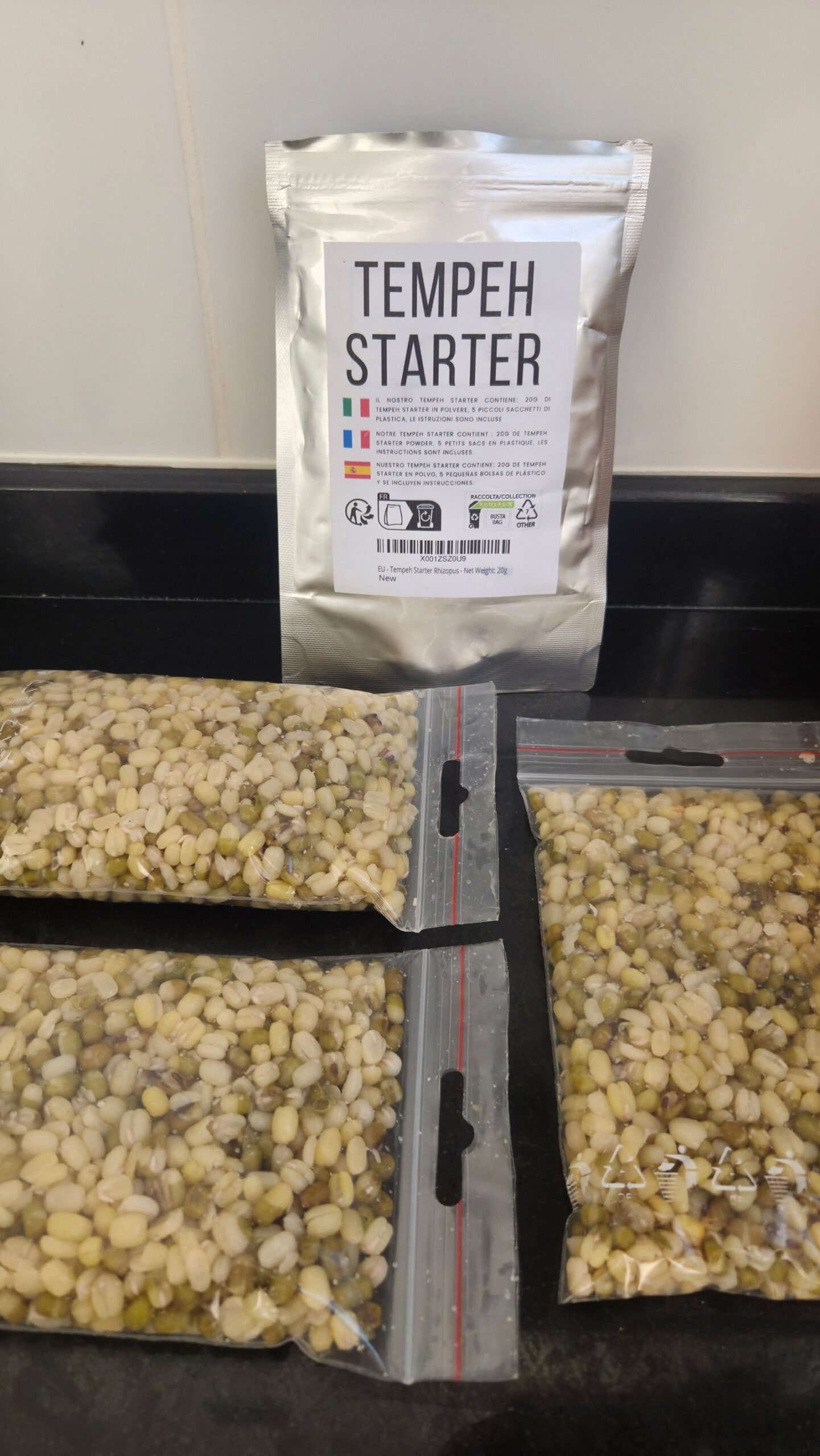
Put the mixture into the perforated zip bags from the kit. Holes provide the oxygen needed. Form layers around 2 cm thick. Avoid thicker layers. Close and flatten to an even thickness.
Place the bags somewhere warm at 30–32 °C for 24–48 hours. A yoghurt maker, oven light or fermentation box can be used with temperature control. After 24 hours you should begin to see white mycelium binding the beans into a firm block, indicating fungal growth. The kit’s instructions describe black specks as potentially mature spores.
After fermentation, refrigerate for up to one weekor freeze in portions.
Each batch improves with practice. Once confident with soya, experiment with chickpeas, beans and lentils. Happy fermenting!
We bought this one on Amazon: Homemade tempeh kit
Eggs are valued for protein, but homemade tempeh also provides plenty while fully plant-based. A medium egg of around 60 g contains approximately 6 g protein. By comparison, 100 g soya tempeh provides around 19 g protein, more than three times one egg’s amount. Tempeh protein is complete: it contains all essential amino acids without cholesterol or animal fats. Fermentation supports digestibility. For a vegan dietit offers protein for balanced eating without animal products.

An advantage of homemade tempeh is the ability to use other pulses for different flavours and textures. Here are approximate carbohydrates per 100 g cooked:
The process is the same: soak, peel if needed, cook, acidify with vinegar, inoculate and ferment in perforated bags. Flavour, texture and nutrition differ; experiment to find your favourite.
Déjanos tu email y descubre cómo conseguir un postre gratis en Veganashi durante octubre. Además, entrarás en el Radar Vegano BCN para recibir nuestras novedades y promociones.
📡 ¡Bienvenido al Radar Vegano BCN!


